HVAC System Optimization for Energy Management
Real-Time, Predictive Control That Cuts Cooling Energy Without Sacrificing Comfort
If your chiller plant (and the air-con system connected to it) is still being controlled by fixed schedules, manual setpoints, or “safe buffer” operation, you’re almost certainly paying for unnecessary cooling.
Our AI Chiller System is an AI-driven HVAC optimization layer that learns how your building actually behaves -then continuously adjusts chilled-water production and distribution to match real demand, not assumptions. It is designed to be retrofit-friendly, wireless, and compatible with existing BA/BMS, so you can upgrade performance without ripping out your current automation.
What is an AI Chiller System?
An AI Chiller System is a software + hardware solution that turns your cooling plant into a self-optimizing, predictive system.
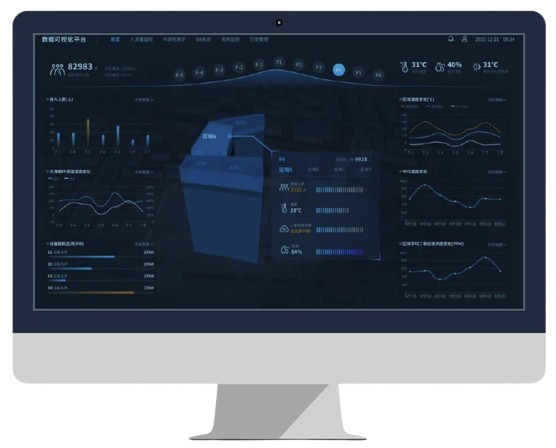
Instead of relying on operators to tune parameters or keep “extra cooling” for safety, the AI uses live building data (occupancy, temperature, humidity, CO₂, PM2.5, weather, and energy meters) to calculate the best operating strategy—minute by minute.
In simple terms:
You tell it your comfort requirements → it automatically finds the most energy-efficient way to maintain them.
How it Works
1) It connects to what you already have (BA/BMS compatible)
The system is built to co-exist with your existing BA/BMS—not replace it. You can run AI control and still keep your original control logic available as a fallback, with the ability to switch modes when needed.
2) It “sees” real demand using wireless sensors + occupancy analytics
Most HVAC waste comes from guessing demand. This AI approach reduces guesswork by collecting:
- Indoor comfort + IAQ data (temperature, humidity, CO₂, PM2.5) via wireless sensors
- Human flow / occupancy patterns (zone-level traffic and movement prediction)
- Energy & utility data (smart meters for electricity/water/gas, logging & analytics)
- Weather signals (for better load prediction)
3) It predicts what will happen next—then adjusts early
Instead of waiting until a zone is too warm (reactive control), the AI uses prediction to:
- pre-condition only the necessary zones,
- avoid overshoot and oscillation,
- reduce unnecessary fresh air / cooling in low-traffic areas,
- keep the whole system stable.
This is the key shift: automation → AI intelligence.
4) It optimizes plant and system operation as one coordinated strategy
A major source of waste is that building subsystems operate in silos.
This system explicitly aims to connect “people flow data” with BA control, enabling more precise, zone-based HVAC management.
What Outputs Do You Get?
A) Control Outputs (what the AI actually controls)
Depending on your site configuration, the AI can drive or optimize:
- Chiller staging / operation strategy
- Pump and cooling tower coordination (for chiller plants)
- Terminal unit/zone strategies (where integrated)
- Lighting coordination (in some deployments)
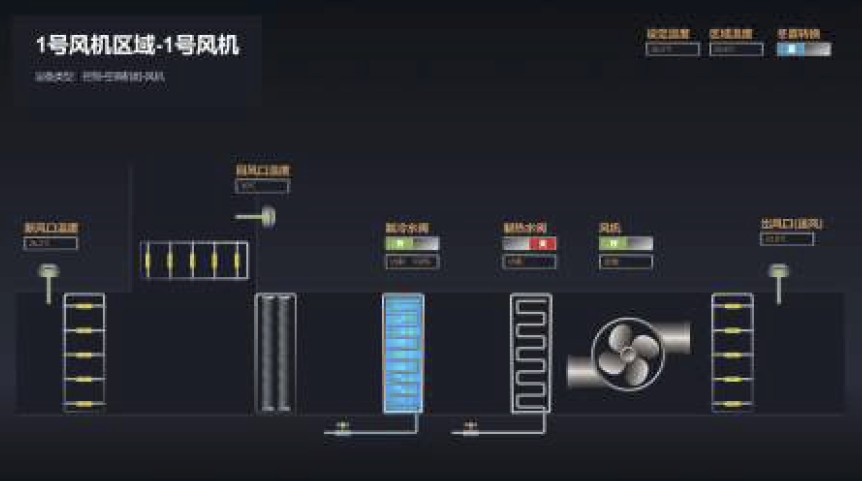
B) Management Outputs (what you see and report)
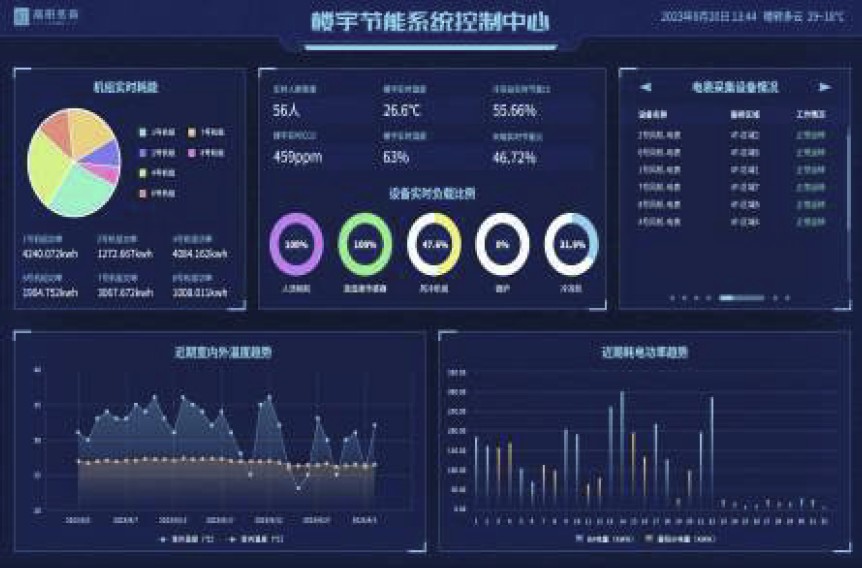
- Real-time dashboard + historical trends
- Mobile monitoring and visualization
- Data chain for continuous improvement and long-term asset management
Benefits & Performance
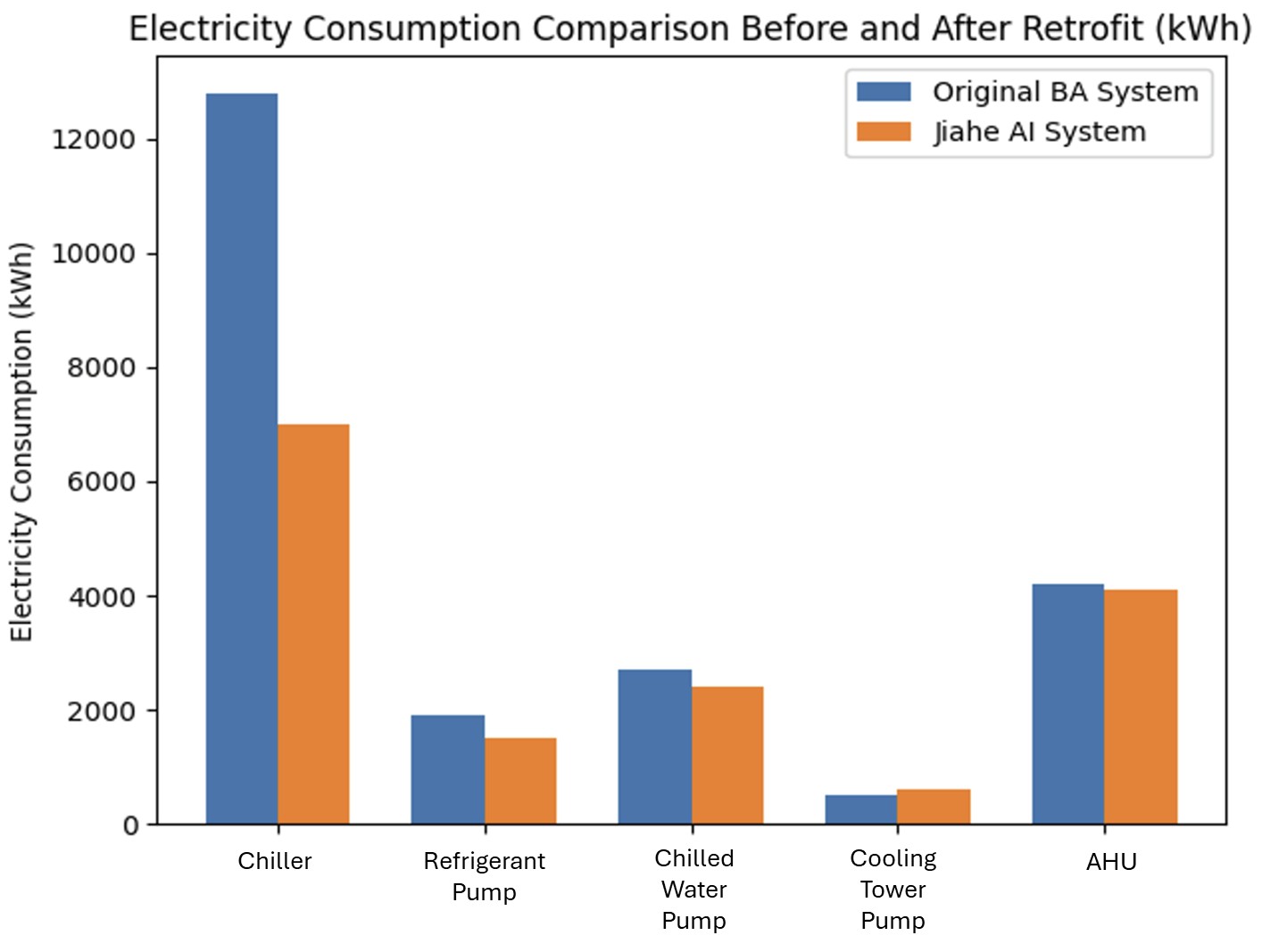
1) Lower cooling energy—without comfort complaints
The stated principle is clear: meet customer experience first, then save energy - not “save energy at all costs.”
2) Recover “manual buffer waste”
Traditional control often cools too early or too much because operators leave safety margins.
AI reduces that waste by continuously balancing temperature using live occupancy + weather + IAQ signals.
3) Zone-level optimization based on people flow
If you manage retail, malls, museums, transit stations, or mixed-use buildings, occupancy varies by zone and by hour.
The AI can pre-plan zone setpoints based on predicted movement and density, reducing “empty-zone cooling.”
4) Faster retrofit with less disruption
Wireless deployment is emphasized to reduce wiring, engineering workload, and impact to tenants/operations.
5) ESG, audit readiness, and long-term continuous commissioning
By turning real-time data into a historical record, you gain the foundation for:
- energy verification,
- audit support,
- ESG reporting,
- ongoing tuning rather than “one-time retrofit.”
Performance & Proven Results (Case Examples)
In the provided case examples, reported measured savings include:
- Government Service Center Case (Chengdu, China) : >40% actual savings
- Commercial Building Case (Chengdu, China) : >36% actual savings
- Commercial Building, IFC Case (Chengdu, China) : >40% sample zone savings
- Metro Station (Xi'An, China) : >40% actual saving
(Results vary by building type, operating hours, baseline condition, and integration depth.)
Components Required (Hardware + Software)
1) AI Software Platform (The “Brain”)
Key capabilities described:
- AI learning and optimization
- Visualization on central console + mobile
- Works with existing BA data and can support intelligent control
- Training from 1000+ buildings and pre-learning 60+ energy-saving approaches
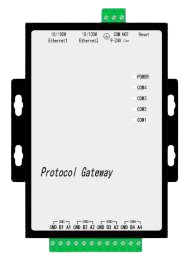
2) Compatibility Gateway (BA/BMS Integration)
A gateway layer enabling compatibility with existing BA/BMS systems and easier integration.
3) Wireless IAQ & Comfort Sensors
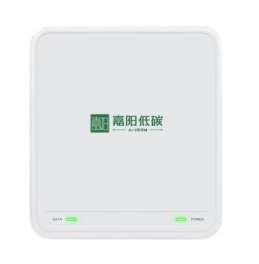
Wireless multi-parameter sensors measuring CO₂, temperature, humidity, PM2.5, battery-powered with long life and wireless transmission.
4) PLC Cabinet + Wireless Communication
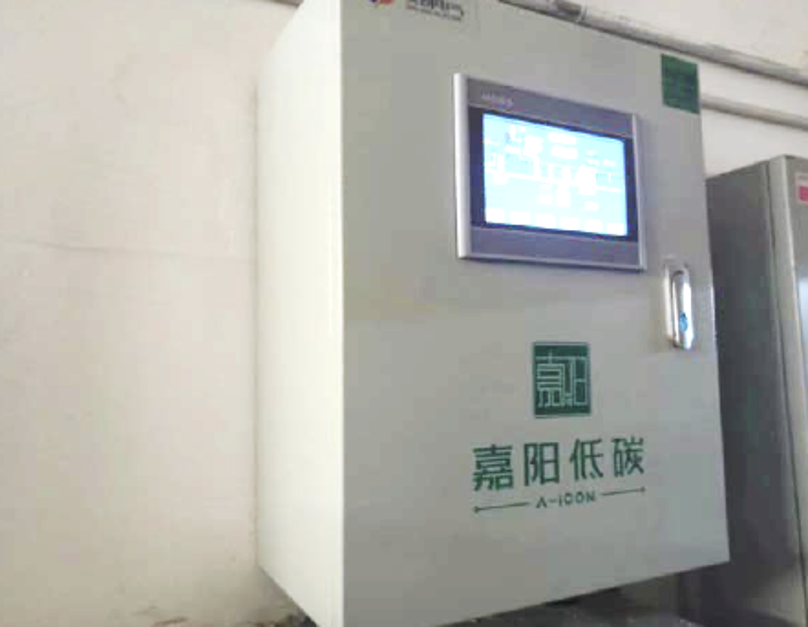
Supports:
- wireless signal transmission,
- remote PLC debugging,
- remote program download,
- timed restart and control features.
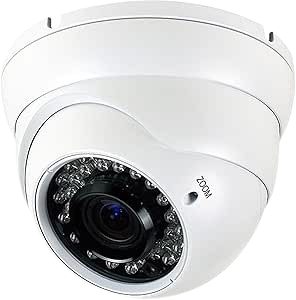
5) People Flow / Occupancy Counting using CCTV cameras (Optional but Powerful)
Used to:
- divide space into zones,
- measure density and movement direction,
- predict traffic and pre-adjust HVAC.
6) Smart Metering (Electricity)
For measurement, verification, and continuous improvement.
What Inputs Does the AI Receive?
Real-time operational inputs
- Indoor temperature & humidity
- IAQ signals (CO₂, PM2.5)
- Zone occupancy / human flow (density + direction + prediction)
- Weather data
- Metering data (kWh and utilities)
System integration inputs (when connected)
- BA/BMS points (status, setpoints, alarms, schedules)
- Plant equipment status (chillers/pumps/towers, depending on scope)
Who Is This Best For?
If you operate any of these, AI chiller optimization is typically a strong fit:
- Malls and retail complexes (highly variable traffic)
- Museums, galleries, cultural buildings (comfort + reliability)
- Metro / transport hubs (dynamic occupancy)
- Office towers and mixed-use commercial
- Government / public service buildings
(Examples in the deck include commercial and transport environments.)
Frequently Asked Questions
No—this is designed to co-exist with your existing BA/BMS, and allow switching between AI control and original modes.
The approach emphasizes wireless deployment to reduce wiring, cost, and disruption.
Case examples report ~36% to 40%+ in specific projects/zones. Actual savings depend on baseline operations and integration depth.
The system is described as trained on 1000+ buildings, pre-learning 60+ energy-saving strategies, and using AI learning/prediction/optimization rather than static rules.
See what this could do in your building
Request an AI Chiller Opportunity Assessment:
- Current plant overview (chillers/pumps/towers)
- Existing BA/BMS brand and available points
- 2–4 weeks of utility and operating-hour data
- Areas with comfort complaints or high traffic variability
We’ll show you where AI control can reduce waste without changing the occupant experience.
Explore Related Energy Loss Topics
This problem connects to broader thermal-efficiency challenges across industries: