What savings did the audit confirm?
The third-party energy audit report (October 2025) recorded electricity saving rates of 40.03% at Lijiacun Station (Line 4), 43.11% at Olympic Sports Center Station (Line 14) and 49.85% at Mutasi West Station (Line 8 loop line).
| Line | Station | Electricity saving rate |
|---|---|---|
| Line 4 | Lijiacun Station | 40.03% |
| Line 14 | Olympic Sports Center Station | 43.11% |
| Line 8 (loop) | Mutasi West Station | 49.85% |
The largest reduction came from the chillers, which used roughly half as much electricity after AI control; chilled-water pumps, condenser-water pumps, cooling towers and air-handling units also used less.
Source: “AI Digital Management and Air Conditioning Energy Saving Pilot Project — Energy Audit Report”, Xi'an Xitou Energy Conservation Assessment Center Co., Ltd., October 2025.
Did comfort suffer?
No. The audit found average area temperature of 24.25 °C before and 24.51 °C after — closer to the 26 °C set-point — with smaller fluctuation than before.
From 5 September 2025 indoor temperatures fell below 24 °C because outdoor temperatures were only 14–21 °C; the auditor concluded the temperature goal was met.
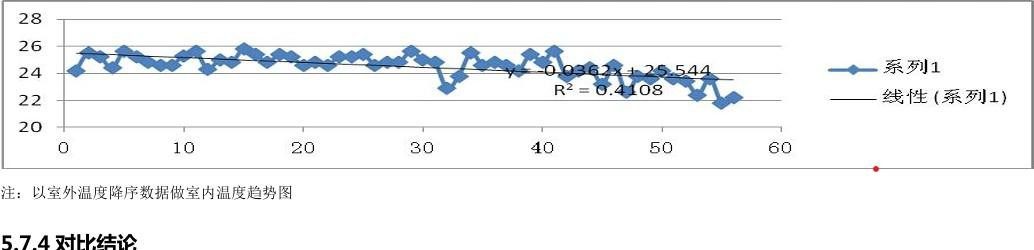
Audit conclusion: the AI energy-saving system keeps the ventilation and air-conditioning system in a high-efficiency range, with indoor temperature well within the control range, small fluctuation and high comfort.
Recommendation: the system has advanced technology and outstanding energy savings, needs no large-scale modification of the original plant, is safe and fast to implement, and is recommended for large public areas.
What was installed in the stations?
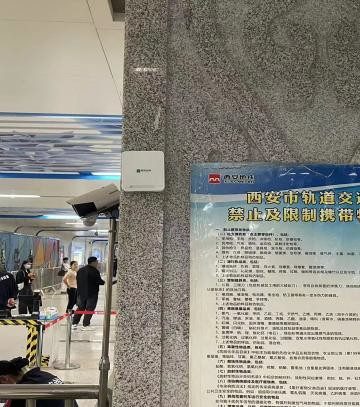
Each station kept its existing chilled-water plant and building automation (BA) system. The project added environmental sensors, smart power meters and an AI control layer that learns the stations' behaviour and drives the plant automatically.
- Sites
- Xi'an Metro Line 4 Lijiacun Station; Line 14 Olympic Sports Center Station; Line 8 (loop) Mutasi West Station — Xi'an, Shaanxi, China
- Equipment
- Station chilled-water plants: chillers, chilled-water and condenser-water pumps, cooling towers, air-handling units (AHUs)
- Solution
- AI chiller and HVAC optimisation (AI-CON) working with the existing BA system
- Scope
- 1. Sensors and smart meters to collect environmental and energy data. 2. AI works with the BA to learn, analyse and control as a fully automated energy-saving system. 3. Ongoing optimisation, monitoring and management
- Measurement
- Metered electricity of the ventilation and air-conditioning systems before and after AI control; indoor temperature logging
- Verification
- Independent energy audit, Xi'an Xitou Energy Conservation Assessment Center Co., Ltd., October 2025
How do operators monitor the system?
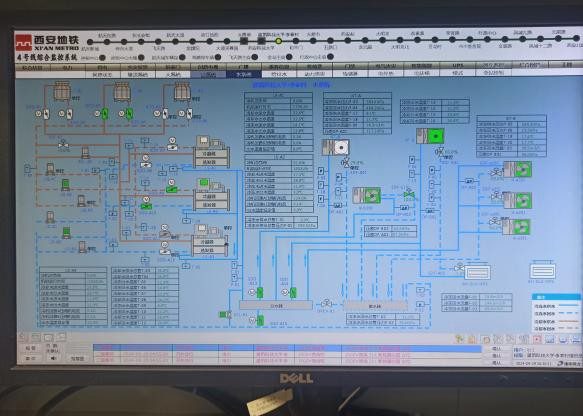
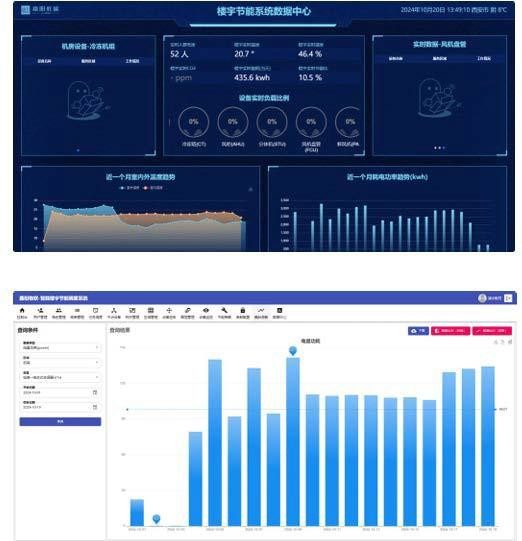
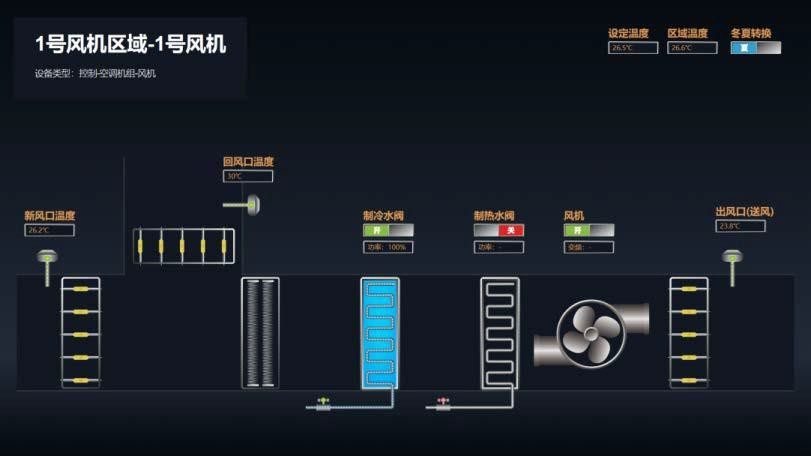
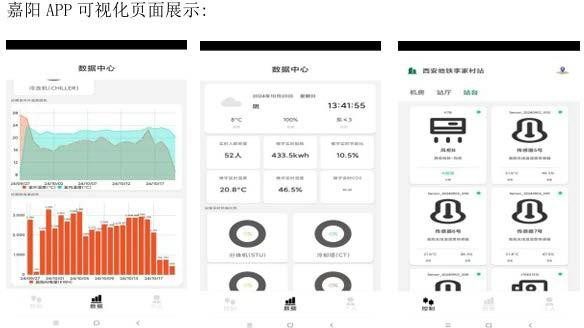
Station staff see the plant through a monitoring console and a mobile app, with live energy data, AHU status and temperature trends.
Frequently asked questions
Did the stations replace their chillers or BA system?
No. The AI layer works with the existing building automation and plant. Wireless sensors and meters were added, so the stations kept running during installation.
Who verified the savings?
Xi'an Xitou Energy Conservation Assessment Center Co., Ltd., an independent energy-audit body, in its October 2025 audit report on the pilot project.