
How much did performance improve?
The enthalpy difference across each evaporator — the heat removed per pound of air — rose by 13.9% to 31.7% at the first post-treatment test and by 22.4% to 31.6% at the second. Weighted by unit size, that is about 26% and 28% more cooling from the same air flow.
| Unit (size) | Before 9 Jun 2009 | After 11 Jul 2009 | After 18 Aug 2009 | Increase (Jul) | Increase (Aug) |
|---|---|---|---|---|---|
| Unit 1 (12.5 t) | 10.5 | 13.2 | 12.8 | +25.8% | +22.4% |
| Unit 2 (12 t) | 10.6 | 13.7 | 14.0 | +29.3% | +31.6% |
| Unit 3 (10 t) | 10.5 | 13.8 | 13.5 | +31.7% | +28.2% |
| Unit 4 (12 t) | 11.1 | 12.6 | 14.1 | +13.9% | +27.6% |
| Unit 5 (16 t) | 10.5 | 13.6 | 13.6 | +29.3% | +29.5% |
Values are evaporator enthalpy difference (return-air minus supply-air enthalpy, BTU/lb). Outdoor conditions were hotter after treatment (99 °F / 75% RH and 96 °F / 61% RH) than before (83–85 °F / 55% RH), which normally lowers performance — so the measured gain is conservative.
What site and equipment were treated?
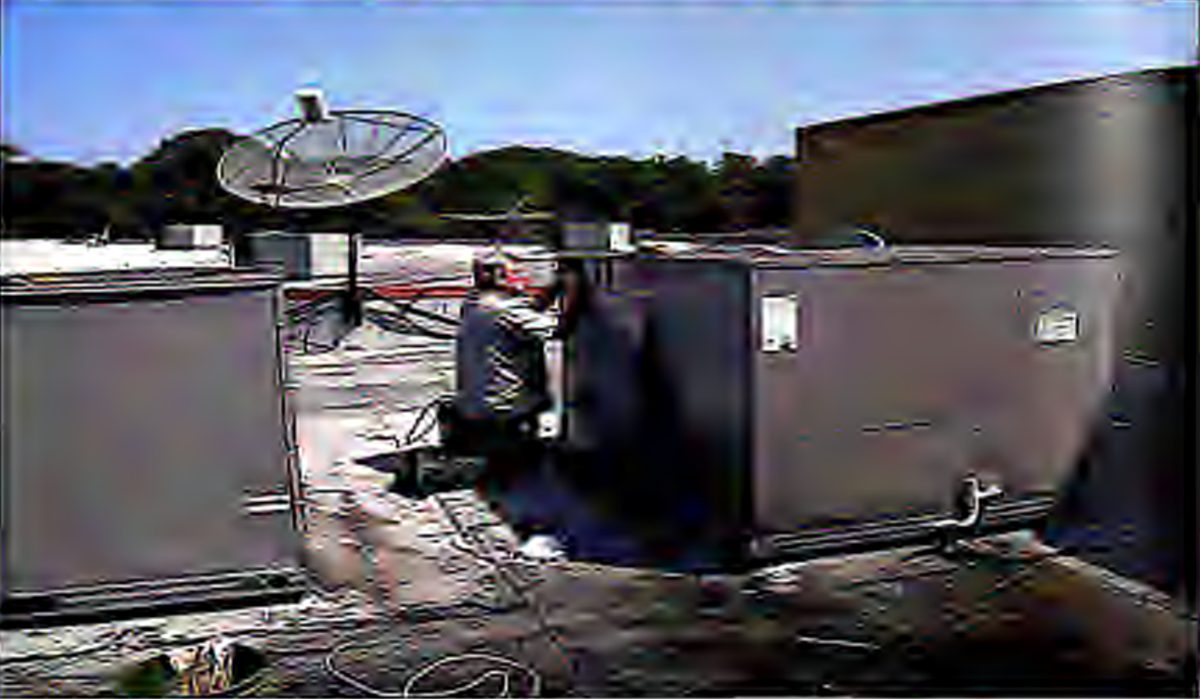
A full-service restaurant in Jacksonville, Florida, USA, cooled by five Carrier rooftop package air-conditioning units totalling 62.5 tons (about 220 kW cooling).
- Site type and location
- Restaurant, Jacksonville, Florida, USA — hot, humid climate
- Equipment
- Five Carrier rooftop package units: 2 × 12 tons, 1 × 12.5 tons, 1 × 10 tons, 1 × 16 tons
- MaxR100 used
- MaxR100 refrigerant performance enhancer injected into each unit's refrigerant circuit (dosed by unit tonnage)
- Pre-check
- All units inspected by a qualified HVAC contractor before and after treatment
- Measurement method
- Return and supply air temperature and relative humidity at each evaporator → enthalpy difference; capacity = 4.5 × Δh × CFM, with airflow (CFM) constant
- Measurement period
- Baseline 9 June 2009; post-treatment 11 July 2009 and 18 August 2009 (40 days after the first post test)
- Tested by
- Independent instrumentation and testing firm, Chesapeake, Virginia; report dated 21 August 2009
What does a 26–28% capacity gain mean for energy and payback?
The test measured cooling output, not kWh. When each unit delivers more cooling per hour of compressor run time, it reaches set-point sooner and runs less — so energy use falls roughly in line with the capacity gain.
The report did not meter kWh or calculate dollars or payback. In other MaxR100 projects where energy was metered, savings of 16–35% were recorded; in the retail-store case payback was about six months. The report records the thermostat set-point as 74 °F at the first post-treatment test and 78 °F at the second.
Frequently asked questions
Why measure enthalpy instead of temperature?
Enthalpy includes both temperature and moisture. In a humid climate much of an air conditioner's work is removing moisture, so the enthalpy difference across the coil is a truer measure of cooling delivered than temperature drop alone.
Was airflow measured?
No. Airflow was assumed constant before and after, so the percentage change in enthalpy difference equals the percentage change in cooling capacity.