
How much energy did the coating save?
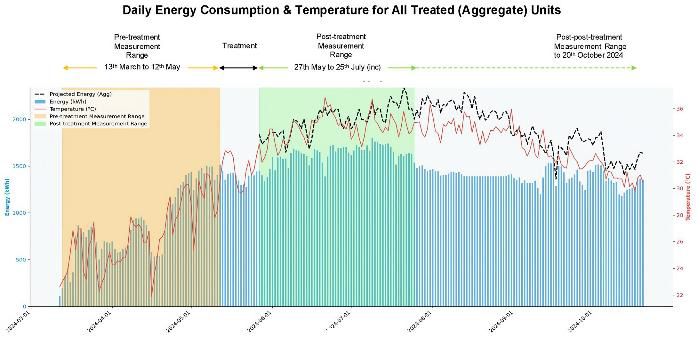
Over the 27 May – 20 October 2024 comparison period, the seven coated units used 97,441 kWh against a projected 119,554 kWh without coating — a saving of 22,113 kWh, or 18.5%.
| Unit (anonymised order) | Energy reduction |
|---|---|
| Unit A | 28.49% |
| Unit B | 28.25% |
| Unit C | 21.91% |
| Unit D | 15.07% |
| Unit E | 13.62% |
| Unit F | 8.74% |
| Unit G | 5.32% |
| All seven units (aggregate) | 18.50% |
Using dry-bulb temperature alone as the regression variable gave 16.22%; using wet-bulb temperature gave 20.66%. The 18.5% headline is the mid-point method reported in the case study.
What site and equipment were treated?
Seven rooftop package air-conditioning units serving a supermarket at Safa Park, Dubai, United Arab Emirates — a hot, humid, coastal climate where condenser coils foul and corrode quickly.
- Site
- Choithrams supermarket, Safa Park, Dubai, UAE
- Equipment
- 7 rooftop package units (air-cooled condenser coils)
- Solution
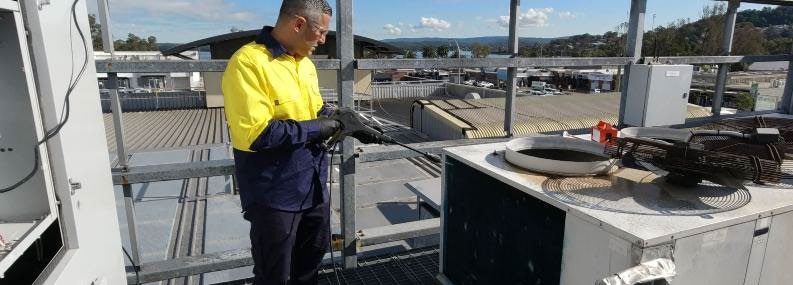
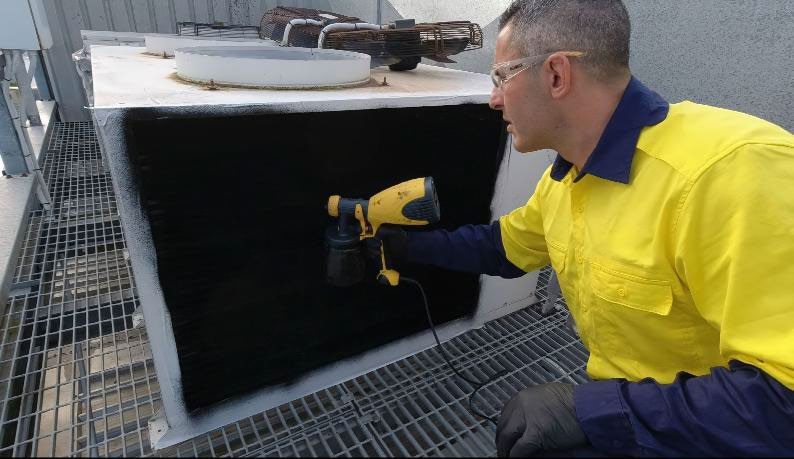
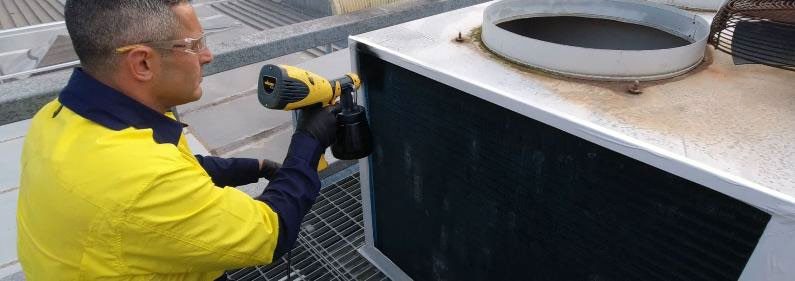
- Radiant+ E3 Coating System (ECRA-E3): clean, treat and coat condenser coils
- Baseline period
- 13 March – 12 May 2024
- Coating
- 13 – 16 May 2024
- Post-treatment analysis
- To 20 October 2024; regression comparison period 27 May – 20 October 2024
- Measurement
- Energy meters installed on each package unit; daily kWh modelled against ambient temperature to project consumption without coating
- Verification
- TQI digital measurement, reporting and verification (dMRV), following IPMVP and ISO 14064-2 principles
What did it mean financially?
Beyond the electricity saved, the owner avoided replacing corroded coils — estimated in the case study at about $50K per unit — and the work was done with no downtime.
The case study did not state the tariff or a payback period. Payback depends on the local tariff and the units' running hours; ask us for the calculation on your own site.
Did the result lead to further projects?
Yes. Following the result, a facilities-management company for a large Dubai property group piloted the coating on one unit in a staff accommodation site and recorded a 50% increase in airflow and a 38% reduction in energy cost.
That site has more than 2,000 units of 5.27 kW each, which is the basis for a wider roll-out. A separate trial in an industrial district was tracking at 11% energy reduction at the time of the case study.
Frequently asked questions
How were the savings calculated?
Daily kWh from meters on each unit was modelled against ambient temperature during the baseline. The model projects what the units would have used after 27 May without coating; actual metered use was compared with that projection.
Why do the seven units save different amounts?
Each unit started in a different condition. The most fouled and corroded coils (units A and B) recovered the most, at about 28%; units already in good condition saved 5–9%.